Dec 19, 2025
California Waterfowl Association and Partners Supply Water to Klamath Refuges
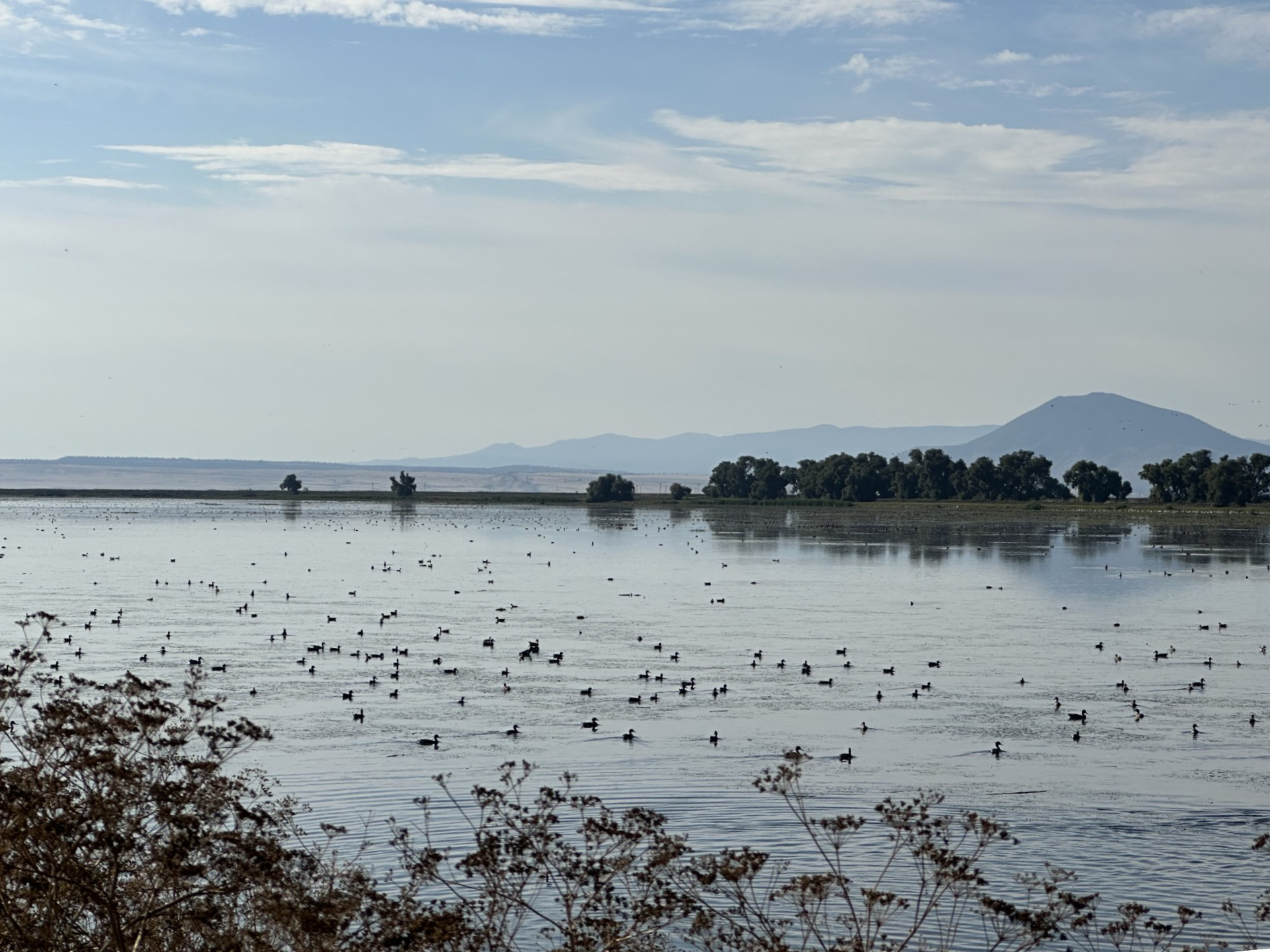
Facing a worsening conservation crisis in the Pacific Flyway, the California Department of Fish and Wildlife (CDFW), Tulelake Irrigation District (TID), United States Fish and Wildlife Service (USFWS), Klamath Drainage District (KDD) and California Waterfowl Association (CWA) stepped up this year to help provide water for critical Lower Klamath National Wildlife Refuge (LKNWR) and Tule Lake National Wildlife Refuge (TLNWR) wetlands. This action not only benefitted waterfowl and other wetland-dependent wildlife, but also increased and enhanced fall hunting opportunities in the Klamath Basin.
A Critical Waterfowl Region in Crisis
The Klamath refuges serve as one of the Pacific Flyway's most important waterfowl breeding, molting and migration staging areas. Around 80 percent of the flyway’s migrating waterfowl pass through the Klamath Basin during spring and fall migrations, highlighting the region’s irreplaceable role in supporting North America’s waterfowl populations. The region is also essential habitat not just for migratory waterfowl, but also for local birds. This is especially important to hunters, since about 50% of several species of commonly harvested birds (mallards, gadwall, cinnamon teal and wood ducks) are produced in California.
The refuges have faced a severe, well-publicized water crisis for years. Waterfowl brood production at LKNWR, particularly in Units 2 and 3, suffered as a result. To compound the brood production issues, avian botulism outbreaks at neighboring TLNWR, which are exacerbated when water is in short supply, have presented additional challenges for waterfowl. As ducks crowd into shrinking wetlands, disease spreads rapidly and can kill tens of thousands of ducks a year. In 2024, a record-setting 100,000+ birds died from avian botulism at TLNWR alone.
While strong precipitation filled the watershed and provided a potential lifeline, the challenge remained of getting the water to the refuges and moving it through managed wetland units. Unfortunately, federal budget cuts combined with exponentially higher water pumping costs threatened to put relief out of reach.
Partnership to the Rescue
Luckily, CWA was able to play a direct role in increasing water deliveries to the refuges. Since March of 2025, CWA worked with the TID, CDFW and USFWS to pump over 40,000 acre-feet of water, and TID played a key role in running more water to Sump 1A at TLNWR to prevent a major botulism event. At LKNWR, the additional water filled the Stearns Unit, White Lake and Units 4A, 4B, 6A, 6B, 7A, 8B and 9A, augmenting water supplied by a water right acquisition that CWA brokered in 2024, which specifically helped sustain Units 2 and 3 over the summer. All combined, the water helped produce ducks at a level not seen since the late 1980s and early 1990s, curb botulism, support fish and migratory birds and increase hunting opportunities.
This year’s conservation success was made possible by collaboration between CWA, the CDFW, USFWS, KDD, TID and the farmers that they represent. CWA thanks its partners and supporters who have stayed vigilant in working to supply water for the Lower Klamath Refuges and helped us protect this critical piece of the Pacific Flyway.
Funds for additional water pumping came from a generous grant from the CDFW and from CWA’s Klamath Fund. With more water on the refuges than we’ve seen in many years, the stage is set for improved breeding habitat and duck production in 2026.
Our Klamath Work Continues, With Your Help
However, CWA’s work is far from finished, and we have a long way to go. The refuges still have little assurance of water needed to support breeding and molting waterfowl during the summer, or in the fall during peak migration periods. CWA’s advocacy team continues to work the halls in Washington, D.C., and Sacramento in search of a long-term solution that includes increased operating and staffing budgets to support the refuges.
CWA is also working with the Klamath refuges on several large-scale water delivery infrastructure and wetland restoration projects. Recognizing the complexity and time required for more permanent, large-scale water delivery system solutions, and knowing that waterfowl can’t delay their annual migration, CWA aims to deliver a minimum of 25,000 acre-feet of water per year, which would cost approximately $500,000 annually.
“This isn’t a quick fix, but rather a lifeline to a fragile ecosystem that has been teetering on the brink,” said Jake Messerli, CWA’s chief executive officer. “Pumping this water will protect one of the most important wetlands in the Pacific Flyway and give both waterfowl and fish that depend on these wetlands a fighting chance.”
Moving forward, CWA and its hunter-conservationist members will continue to lead the charge for waterfowl conservation in the Klamath region and all of California.
To help CWA meet its conservation goals in Klamath, donate to the Klamath Fund here, or reach out to CWA Vice President of Fund & Membership Scott Mueller at smueller@calwaterfowl.org. All donor contributions to the fund will go directly toward obtaining more water deliveries, improving water infrastructure and other related efforts to maximize conservation success in the region.


###